Integrated parasite management (IPM) is the modern, sustainable answer to worm control. Rather than leaning on a singl etool — usually chemical drenching — it combines every available method into oneplanned system: monitoring, strategic treatment, grazing and pasturemanagement, biological control, nutrition and genetics.
Each lever does a different job,and together they keep parasites in check while protecting the tools you rely on.
The shift in thinking is simple but important. For decades, worm control meant killing the worms inside the animal. But with drench resistance now a global crisis, and with the great majority of the worm population living out on the pasture rather than in the animal, sustainable control means managing the whole parasite population— in the stock, in the dung and on the pasture.
The shift in thinking is simple but important. For decades, worm control meant killing the worms inside the animal. But with drench resistance now a global crisis, and with the great majority of the worm population living out on the pasture rather than in the animal, sustainable control means managing the whole parasite population— in the stock, in the dung and on the pasture.
The principles behind it
This section covers the two ideas that hold an integrated program together:
- Refugia Strategy — the principle that protects the working life of your drenches by keeping part of the worm population susceptible.
- Strategic Management — the practical toolkit: treating, grazing and managing pasture deliberately, with biological control, nutrition and genetics, so you target the parasite’s weak points and reduce your reliance on chemicals.
Used together — alongside the science covered elsewhere in this section, including the global resistance crisis and the role of biological control — these reduce losses, slow resistance, and protect both your animals and the drenches that remain effective.
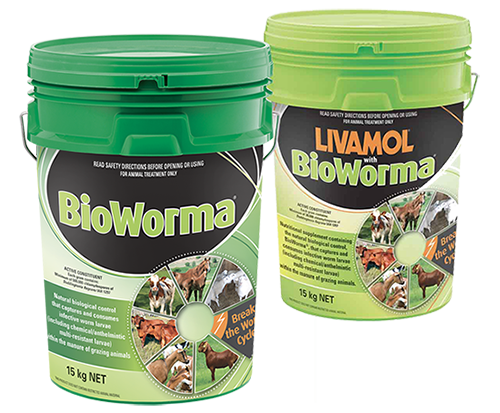
Where BioWorma fits: Biological control is one tool within an integrated program — the one aimed squarely at the worm larvae on the pasture. It works best alongside good monitoring, treatment and grazing, not in place of them.
Refugia Strategy
“Refugia” is one of the most important ideas in modern parasite control, and at first it sounds back-to-front: deliberately leaving some worms alive is how you protect your drenches.
What refugia means
Refugia is the portion of the worm population not exposed to a treatment at the time you treat — the worms inside animals you didn’t drench, plus all the eggs and larvae already out on the pasture. These worms never meet the chemical, so they stay genetically susceptible to it.
Why it slows resistance
Every drench leaves behind the few worms that happen to survive it — the ones carrying resistance genes. If those survivors are the only worms left to breed the next generation, the population shifts rapidly toward resistance. But when a large, susceptible refugia population is present, the survivors mostly breed with susceptible worms, diluting the resistance genes and keeping them rare. Refugia is the brake on resistance.
How resistance is accidentally bred
The fastest way to drive resistance is to treat every animal and then move them onto worm-free pasture, so that the only worms seeding that new pasture are the resistant survivors of the drench. Treating too often, or continuing to use a drench that is already failing, has the same effect — each time, you remove the susceptible worms and leave the resistant ones to multiply.
Maintaining refugia in practice
- Treat selectively, not universally. Use faecal egg counts and FAMACHA to treat the animals that need it and leave the rest —the untreated animals carry susceptible worms in refugia.
- Be careful moving stock onto clean pasture after treatment. If you treat a whole mob and move them onto worm-free ground with no refugia left behind, you select hard for resistance; leaving some animals untreated, or managing the timing, keeps susceptible worms in the system.
- Don’t over-treat. Drench on the basis of monitoring and risk, not habit or the calendar.
- Keep your drenches effective. Confirm what still works with a drench test, because a failing drench leaves resistant survivors every time it’s used.
How biological control complements refugia
Biological control fits refugia perfectly. Because BioWorma removes worm larvae physically — trapping and consuming them in the dung rather than poisoning them — it lowers pasture infectivity without putting any chemical selection pressure on the worms. It reduces the worm challenge while leaving the susceptible refugia genetics intact, so you get fewer worms and a longer working life from your drenches.
The balance: Refugia is about smart treatment, not no treatment. The goal is to leave enough susceptible worms to slow resistance, without letting parasite burdens climb to the point that animals suffer or production is lost. Monitoring is what lets you strike that balance.
Strategic Management
Strategic management means using the full toolkit deliberately — treating, grazing and managing pasture in a planned way that targets the parasite’s weak points and protects the tools you rely on. No single lever does the job on its own; their power is in the combination, with each one breaking the worm’s lifecycle at a different point.
Monitoring — the foundation
Good decisions start with knowing what’s actually happening, not guessing. Faecal egg counts (a WormTest) show the burden in a mob; FAMACHA eyelid scoring tracks anaemia from blood-feeding worms; larval cultures identify the species present; and a drench test reveals what still works on your property. Monitoring is what lets you treat on need, target the right animals, and time every other action well.
Strategic drenching
Drenches remain essential — but as part of the system, used wisely rather than constantly. That means the right product (one proven effective on your property, often as a combination), at the right time (tied to monitoring and the high-risk windows for your stock), in the right animals (targeting those that need it), at the correct dose for bodyweight. Quarantine-drench every new arrival so you don’t buy in resistant worms, and always preserve refugia (see the Refugia Strategy page).
Rotational grazing
Rotational grazing turns worm control into pasture-based prevention. Move stock off a paddock before the eggs they’ve just dropped have time to become infective larvae, and rest the paddock long enough for the larvae already there to die off before stock return. Short grazes also keep animals in the top of the sward, where larvae are fewest, rather than grazing down into the larvae-dense base.
Spelling (resting) pasture
Spelling a paddock — leaving it ungrazed by the susceptible species — lets its larval burden fall as larvae run out of time and host. How long it takes depends on the weather: larvae die off faster in hot, dry conditions and survive longer when it’s cool and moist, so spelling periods need to be matched to the season. Well-spelled paddocks become the low-worm-risk pasture you save for vulnerable stock.
Pasture and grazing management
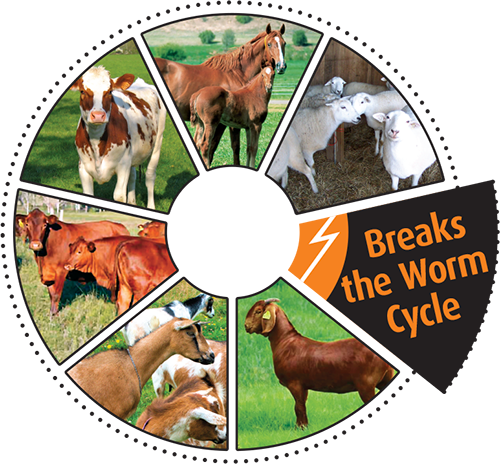
Beyond simple rotation, a few tactics lower the worm challenge: prepare low-worm-risk pasture for the most vulnerable animals (weaners, lambing or kidding females, foals); cross-graze with another species — cattle, sheep, goats or horses — since most worms are host-specific and reach a dead end in the wrong host; and manage stocking pressure so animals aren’t forced to graze hard into the larvae at the base of the sward.
Biological control
Biological control is the pasture-side complement to drenching. Fed daily, the natural fungus Duddingtonia flagrans (the active in BioWorma) traps and consumes worm larvae in the dung before they reach the pasture — including drench-resistant larvae — without harming dung beetles, earthworms or soil life. Because it acts physically rather than chemically, it lowers pasture infectivity while leaving refugia intact, and it tackles the roughly 90% of the worm population that lives on the pasture, which drenches never reach.
Nutrition
Well-fed animals both resist worms (mounting a stronger immune response) and tolerate them (coping better with the burdens they do carry). Adequate protein in particular improves an animal’s ability to withstand parasites, so sound nutrition is a quiet but genuine part of worm control.
Genetics
Over time, selecting animals that carry fewer worms (resistance) and that perform well despite worms (resilience) shifts the whole flock or herd toward needing less intervention. Many breeding programs now provide figures to help choose worm-resistant stock.
Bringing it together
None of these tools is a silver bullet, and that is the point. Strategic drenching clears worms inside the animal; grazing, spelling and pasture management starve the larvae on the ground; biological control removes larvae from the dung; and nutrition and genetics make animals better able to cope. Combine them — guided by monitoring and protected by a refugia strategy — and you keep parasite pressure low, cut your reliance on chemicals, and extend the working life of every drench you have.