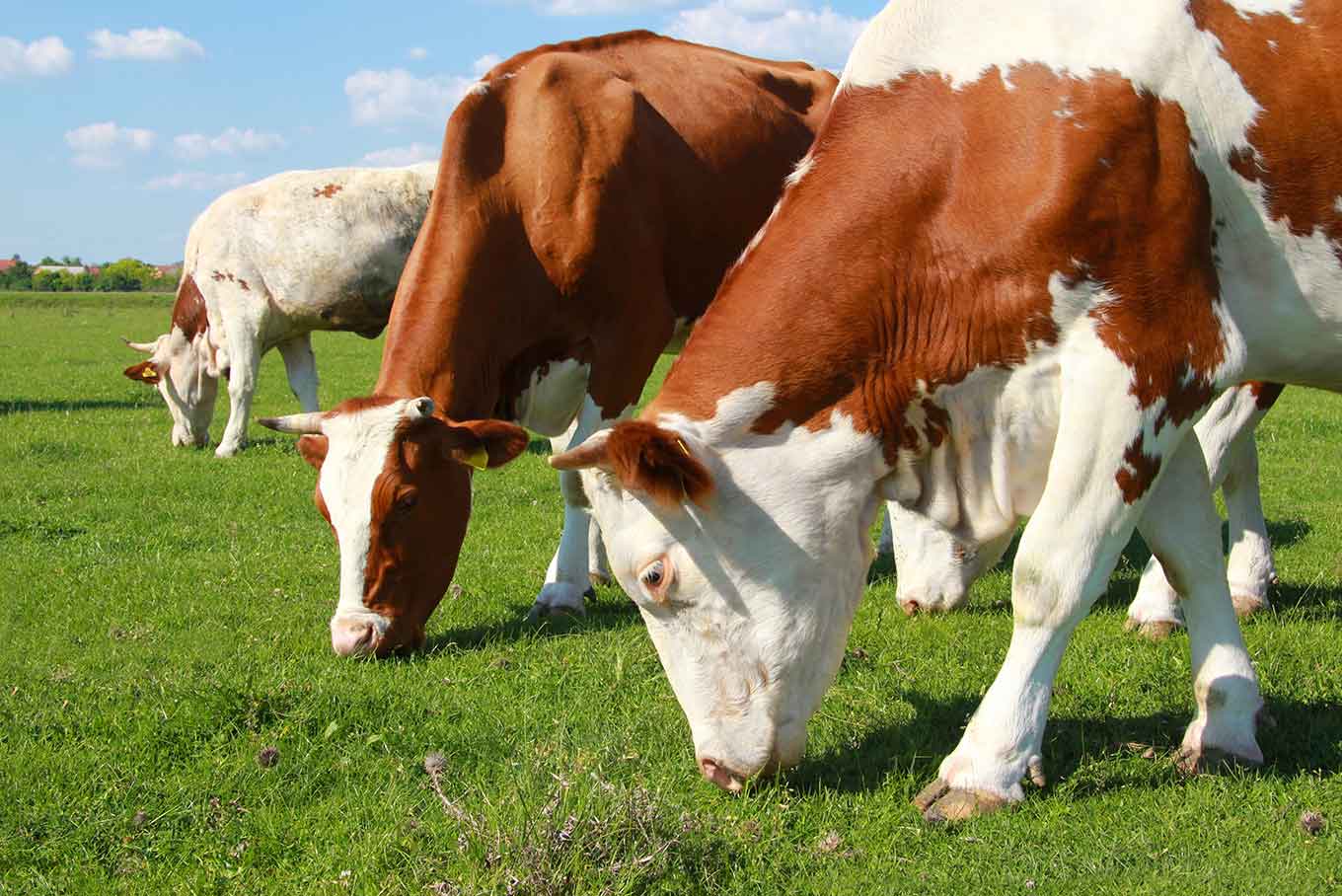
Ostertagia ostertagi, commonly known as the Brown Stomach Worm, is one of the most significant internal parasites of cattle in temperate grazing regions, including much of Australia and New Zealand.
It lives in the abomasum (the true stomach) and is a major cause of production loss — even when infection doesn’t progress to visible disease.
Symptoms
Ostertagiosis presents in two distinct forms. Type I disease affects young cattle (under two years old) toward the end of their first grazing season, usually three to four weeks after exposure to high numbers of larvae on pasture, causing diarrhoea, loss of appetite and weight loss. Type II disease occurs in older cattle (typically two to four years) when larvae that paused their development months earlier resume growth, often over winter or early spring. It is more severe, and signs can include profuse diarrhoea, dehydration, anaemia and swelling under the jaw (sometimes called “bottle jaw”). In serious cases, Type II disease can be fatal if untreated.
Lifecycle Summary
Cattle pick up infective larvae (L3) while grazing. The larvae burrow into the gastric glands of the abomasum, developing through several stages over roughly two to three weeks before emerging as adults into the stomach lining, where they lay eggs that pass out in manure to continue the cycle on pasture. A key feature of Ostertagia ishypobiosis: larvae can pause their development inside the stomach wall for months, particularly over winter, then resume growth simultaneously. This mass emergence is what typically triggers the more severe Type II disease.
Treatment & Resistance Summary
Cattle generally respond well toanthelmintic treatment once clinical ostertagiosis is identified, alongside supportive care such as fluids in severe cases. However, as with most gastrointestinal nematodes, anthelmintic resistance in Ostertagia populations is a growing concern worldwide. Cattle also only develop partial immunity —protection against disease, not against reinfection — meaning regular monitoring remains necessary even in older stock.
Prevention Summary
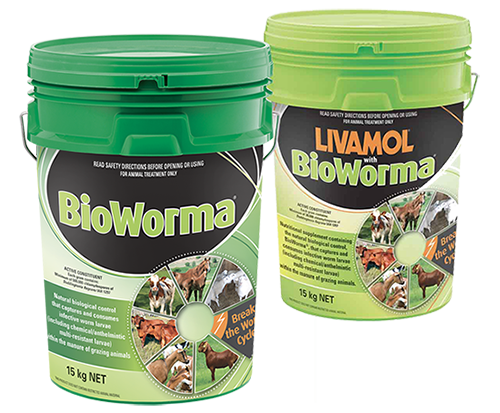
Because Type II disease stems from larvae that arrested months earlier, prevention relies on reducing pasture contamination well before the risk period, alongside strategic drenching and pasture management guided by monitoring rather than a fixed calendar. Non-chemical, biological control also has a role: placebo-controlled cattle trials of Duddingtonia flagrans strain IAH 1297 — the active ingredient in BioWorma®, developed by International Animal Health Products (IAHP) in partnership with CSIRO — included Ostertagia among the nematode species encountered in the treated animals, with pasture larvae reduced by an average of 81% (range 75–88%) over an eight-week period following treatment.
Source:Duddingtonia.com, “Short Term Efficacy Studies with Duddingtonia flagrans.”Cattle trial nematode species included Cooperia spp., Trichostrongylus spp.,Oesophagostomum spp., Ostertagia spp. and Haemonchus spp., includingmulti-resistant strains.

Frequently asked questions
Ostertagia ostertagi, commonly known as the Brown Stomach Worm, questions answered — symptoms, treatment and prevention.
What is the Brown Stomach Worm?
It’s the common name for Ostertagia ostertagi, a roundworm that lives in the abomasum (true stomach) of cattle and is one of the most economically significant internal parasites in temperate grazing regions.
What’s the difference between Type I and Type II ostertagiosis?
Type I affects young cattle during their first grazing season, from a heavy recent larval challenge. Type II affects older cattle when larvae that paused development months earlier resume growth together, usually causing more severe disease.
Can Ostertagia be fatal?
Type II disease can be fatal in severe, untreated cases, though most cattle respond well to anthelmintic treatment once the disease is identified.
Why do larvae “pause” their development?
This process, called hypobiosis, allows larvae to survive unfavourable seasonal conditions (such as winter) inside the stomach wall, then resume development together when conditions improve — which can trigger a sudden, severe outbreak.
Does drenching fully protect cattle from Ostertagia?
Drenching treats existing infection, but cattle only develop partial immunity, so ongoing monitoring, pasture management and reduced reliance on chemical treatment alone all remain important.
Does drenching treat larvae in hypobiosis?
The efficacy of anthelmintic treatment against hypobiotic larvae is variable and depends on factors such as the anthelmintic class used and the presence of anthelmintic resistance within the parasite population. Among the available classes, macrocyclic lactones are generally regarded as the most effective against hypobiotic larvae.