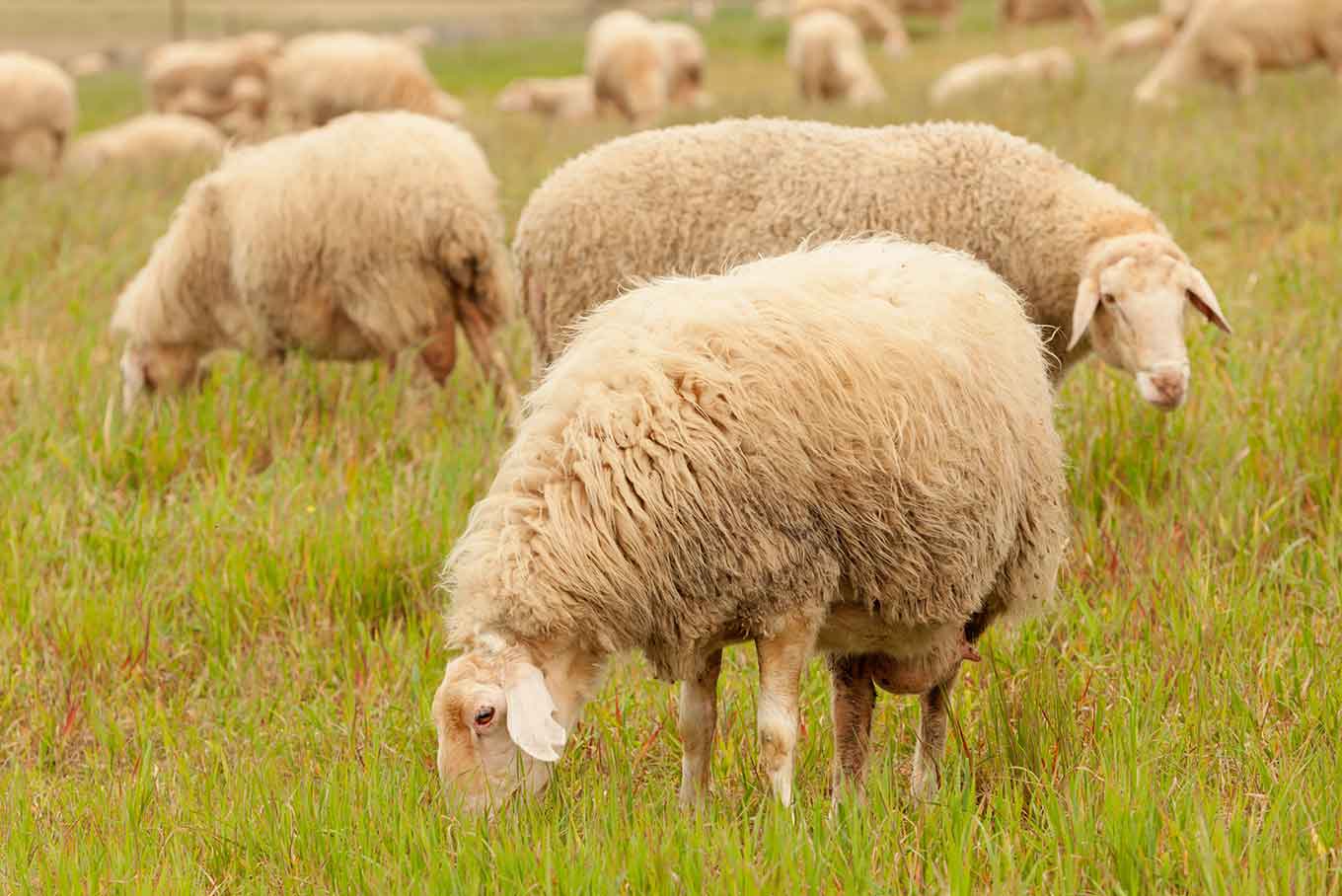
The thin-necked intestinal worm is a roundworm of the small intestine of sheep — and goats, and occasionally cattle — from the genus Nematodirus.
The main species is Nematodirus battus. It takes its name from its slender, thread-like front end. Two things set it apart from the other gut worms: it is mainly a disease of young lambs, and most of the harm is done by the immature (larval) stages rather than the adult worms.
Where it matters
Nematodirus is significant worldwide but is especially important in the United Kingdom, Europe, New Zealand and other cooler, temperate regions, and it occurs in Australia and the USA as well. It is best known as a spring disease of lambs, although changing weather patterns mean it is increasingly seen at other times of year.
Why it is so dangerous
Because the damage comes from larvae developing in the gut wall, disease can strike suddenly and severely —sometimes before the worms are even old enough to lay eggs. On some farms the first sign is a dead lamb. The reasons behind this lie in the worm’s unusual lifecycle, covered in the Lifecycle Summary section: a remarkably tough egg, a weather-triggered “mass hatch,” and an infection cycle that runs from one year’s lambs to the next.
Thin-Necked Intestinal Worm — Clinical Signs
Nematodirus disease tends to appear suddenly in a group of young lambs. Watch for:
- Sudden, profuse yellow-green diarrhoea.
- Rapid dehydration — a classic clue is thirsty lambs crowding around water troughs while the unaffected ewes graze on as normal.
- Loss of appetite and a dull, rough coat.
- A “tucked-up,” pot-bellied appearance from abdominal discomfort.
- Sudden deathwith potentially high losses in a mob.
Because the disease is driven by larval stages, it can hit hard and fast — outbreaks are often a step ahead of what a routine worm test would show.
Who is most at risk
Lambs roughly six to twelve weeks old are the classic victims. Sheep usually build strong immunity during their first grazing season, so it is mostly a disease of the young; adult goats, however, develop weaker immunity and can still be affected.
Diagnosis: See the Treatment & Resistance Summary — a faecal egg count can read low or even negative while lambs are already sick. To assist diagnosis, asses symptoms, grazing history and regional hatch forecasts as well as egg counts.
Thin-Necked Intestinal Worm — Lifecycle Summary
The thin-necked intestinal worm breaks the usual rules, and understanding how is the key to controlling it.
- Development happens inside the egg. Unlike most gut worms, the larva develops all the way to the infective stage within the eggshell, over a period of two months or more.
- The egg is extremely tough. The egg shell and larval sheath together let it survive cold and drying on pasture for up to two years.
- Hatching is weather-triggered. The eggs generally need a cold spell followed by sustained warmth — average daily temperatures of around 10°C or more — before they hatch.
- The “mass hatch.” When a cold period is followed by a sudden, sustained warm-up, overwintered eggs can hatch all at once. If that flush lands just as young lambs start grazing, the larval challenge is enormous and disease can be severe.
- Lamb to lamb. Infection largely passes from one year’s lamb crop to the next — this season’s lambs are infected by eggs shed by last season’s lambs. Ewes play only a minor role, unlike with most other worms.
Animals usually develop strong immunity over their first grazing season, which is why disease concentrates in young lambs. And while the classic timing is spring and early summer, shifting weather means cases are increasingly reported in autumn and, in mild winters, the cooler months too.
Thin-Necked Intestinal Worm — Treatment & Resistance Summary
Treating Nematodirus is less about which drench than about timing — getting ahead of the hatch —because the larvae do their damage quickly.
The drench options
Several drench groups are effective. Notably, the older benzimidazole (“white”) drenches have generally held up well against Nematodirus, even on farms where they have failed against other worms — a useful quirk that keeps a low-cost option on the table. That said, resistance is now emerging in some regions, so a drench test remains wise rather than assumed.
Timing and forecasts
Because a faecal egg count can read low or negative while lambs are already getting sick, you can’t rely on egg counts alone to decide when to act. Many regions publish seasonal hatch forecasts based on weather, and these — combined with clinical signs and grazing history — guide the timing of any preventive treatment around the expected hatch.
Monitor
Use egg counts to track the wider worm picture, but treat Nematodirus on the basis of risk and timing. Confirm suspected cases with your vet, including a larval culture where useful, since the larvae are distinct from other worms.
Thin-Necked Intestinal Worm — Prevention Summary
Prevention for the thin-necked intestinal worm looks different from the other gut worms, because its egg is so hardy and its hatch so weather-driven. The single most powerful tool is grazing separation.
- Break the lamb-to-lamb cycle. Keep this year’s lambs off the paddocks that carried last year’s lambs, since that is where the overwintered eggs are waiting. Lambing and weaning onto pasture that didn’t carry young lambs the previous year sharply lowers the risk.
- Use hatch forecasts to anticipate the spring flush and time any preventive treatment to get ahead of it.
- Support immunity. Good nutrition helps lambs build the strong immunity that normally develops over the first grazing season.
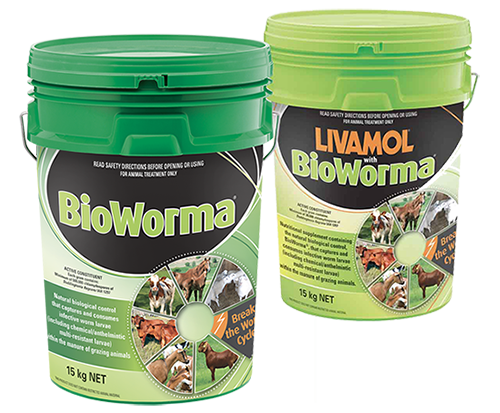
- Biological control. Although the life cycle of Nematodirus differs from that of other gastrointestinal nematodes, studies indicate that BioWorma remains effective as part of a pasture-based parasite control program.
Frequently asked questions
Nematodirus (thin-necked intestinal worm) questions answered — its unusual lifecycle and spring “mass hatch,” why it strikes young lambs, symptoms, drenches and prevention.
What is the thin-necked intestinal worm?
It is a roundworm of the small intestine of sheep — and goats, and occasionally cattle — from the genus Nematodirus, the main species being Nematodirus battus. It is named for its slender, thread-like front end. Unlike most gut worms it is mainly a disease of young lambs, and most of the harm is done by the immature (larval) stages rather than the adults.
Why is Nematodirus different from other worms?
Its lifecycle is unusual in two ways. First, the larva develops all the way to the infective stage inside the eggshell, making the egg extremely tough — able to survive cold and drying on pasture for up to two years. Second, hatching is weather-triggered: the eggs generally need a cold spell followed by sustained warmth (average daily temperatures around 10°C or more).
What is the Nematodirus “mass hatch” or “spring flush”?
When a cold period is followed by a sudden, sustained warm-up, the overwintered eggs can all hatch at once — a synchronised “mass hatch.” If that flush lands just as young lambs begin grazing, they can take in huge numbers at once and disease can strike suddenly and severely. When hatching is spread out, lambs are exposed gradually and build immunity. This is why many regions publish seasonal forecasts to help time treatment.
Why does it mainly affect lambs?
Nematodirus largely passes from one year’s lamb crop to the next — this season’s lambs are infected by eggs shed by last season’s lambs. Animals usually develop strong immunity during their first grazing season, so disease is mostly seen in lambs roughly six to twelve weeks old. (Adult goats develop weaker immunity, so they can still be affected.)
What are the symptoms of Nematodirus?
Sudden, profuse yellow-green diarrhoea, rapid dehydration, loss of appetite, a dull coat, and a “tucked-up,” pot-bellied appearance. A classic clue is thirsty lambs crowding around water troughs while the unaffected ewes graze on. Outbreaks can be sudden, and on some farms the first sign is a dead lamb.
Why can a faecal egg count miss Nematodirus?
Because the damage is done by the larval stages — often before the worms are mature enough to lay eggs. An egg count can read low or even negative while lambs are already becoming sick, so diagnosis relies on clinical signs, grazing history and regional hatch forecasts as well as egg counts.
Does ivermectin treat the thin-necked intestinal worm, and how do I prevent it?
Several drench groups are effective, and notably the older benzimidazole (“white”) drenches have generally held up well against Nematodirus even where they have failed against other worms — though resistance is now emerging in some regions, so a drench test remains wise. The most important prevention tool is grazing: keep this year’s lambs off the paddocks that carried last year’s lambs, and use hatch forecasts to time any preventive treatment. Because Nematodirus larvae develop and survive inside such hardy eggs on pasture, the worm isn’t controlled by natural die-off the way others are — which makes grazing separation especially important.