Nodule worm is a roundworm of the large intestine of sheep, goats and cattle, from the genus Oesophagostomum, and it is found worldwide.
The adults are relatively large for a gut worm — around 20 mm — and are stout and white. The damaging species in sheep and goats is Oesophagostomum columbianum; its close relative, O. venulosum (the “large bowel worm”), is usually harmless and forms no nodules.
How it got its name
As the young larvae burrow into the gut wall, the animal’s immune system walls them off, forming pea-sized nodules — knots — in the intestine. This gives the condition its common names, “knottygut” or “pimply gut.” Over time the nodules can harden as they become caseous or calcified.
How it harms
Damage comes from both the migrating larvae that form the nodules and the adult worms in the large intestine. Together they disrupt the gut wall and impair the absorption of nutrients. There is also a distinct economic sting at slaughter: the nodules damage the intestines so they can no longer be used as natural sausage casings.
Where it matters
Nodule worm occurs around the world but does most of its damage in warm, summer-rainfall regions and through the warmer months. The damaging species is highly fecund — a female can lay many thousands of eggs a day — but its larvae are sensitive to cold and drying, which limits where and when it thrives. Disease is most severe in young and poorly-nourished stock.
Nodule Worm — Clinical Signs
The signs reflect damage to the large intestine from both the larvae and the adult worms:
- Persistent green, mucousy diarrhoea — a hallmark of nodule worm.
- Weight loss and poor growth.
- Depressed appetite and general ill-thrift.
- Lethargy and reluctance to move.
Disease is most severe in young stock and in animals already under nutritional stress. As with other worms, quieter production losses often appear before any dramatic signs.
Who is most at risk
Young, growing animals are the most vulnerable, particularly where nutrition is poor.
Diagnosis: A worm-egg count with a larval culture confirms nodule worm, whose larvae are distinct from those of barber’s pole and black scour worm. Abattoir feedback noting “pimply gut” is another useful signal that the worm is present in a mob.
Nodule Worm — Lifecycle Summary
Nodule worm has a direct, pasture-based lifecycle, but with a distinctive step inside the animal — the nodule-forming stage.
- Adults in the large intestine lay eggs (the damaging species is very prolific, shedding many thousands a day) that pass out in the dung.
- Larvae develop in the dung and emerge onto pasture as the infective third stage.
- Inside the animal, the swallowed larvae burrow into the gut wall, where the immune reaction forms the characteristic nodules.
- After about a week the larvae emerge from the nodules and move to the large intestine to mature into adults, and the cycle begins again.
The prepatent period — the time from infection until eggs first appear in the dung — is around five to six weeks, longer than most gut worms. On pasture, the larvae of the damaging species are sensitive to cold and drying and are killed by frost, so they rarely survive harsh winters. This strongly shapes where and when nodule worm causes problems, concentrating disease in warm, moist conditions.
Nodule Worm — Treatment & Resistance Summary
Compared with some other gutworms, nodule worm is relatively straightforward to treat: the modern broad-spectrum drench groups are generally still effective against it, and routine drenching tends to keep it at low levels.
Treatment
The broad-spectrum groups — benzimidazoles (“white”), levamisole (“clear”), the macrocyclic lactones (“mectins”) and the amino-acetonitrile derivatives (“orange”), as well as combinations — all act against nodule worm. As always, dose to body weight and follow the label.
Why resistance still matters here
Nodule worm is not the main resistance headache that black scour and barber’s pole worms are. But it almost always travels in a mixed infection alongside worms that are, so the same disciplines apply to the whole program: know which drenches still work on your property through a faecal egg count reduction test, use effective combinations, and preserve refugia so you don’t breed resistance into the worms that matter most.
Monitor
A worm-egg count with a larval culture confirms nodule worm and its share of a mixed burden, and abattoir feedback on “pimply gut” is a helpful real-world check that control is working.
Nodule Worm — Prevention Summary
Prevention follows the same principles as the other gut worms: keep pasture infectivity low so animals pickup fewer larvae, and treat strategically rather than constantly.
- Rest and rotate pasture so larvae die off before stock return. Helpfully, nodule worm larvae are killed by frost and drying, so cold or dry spells naturally reduce pasture burdens.
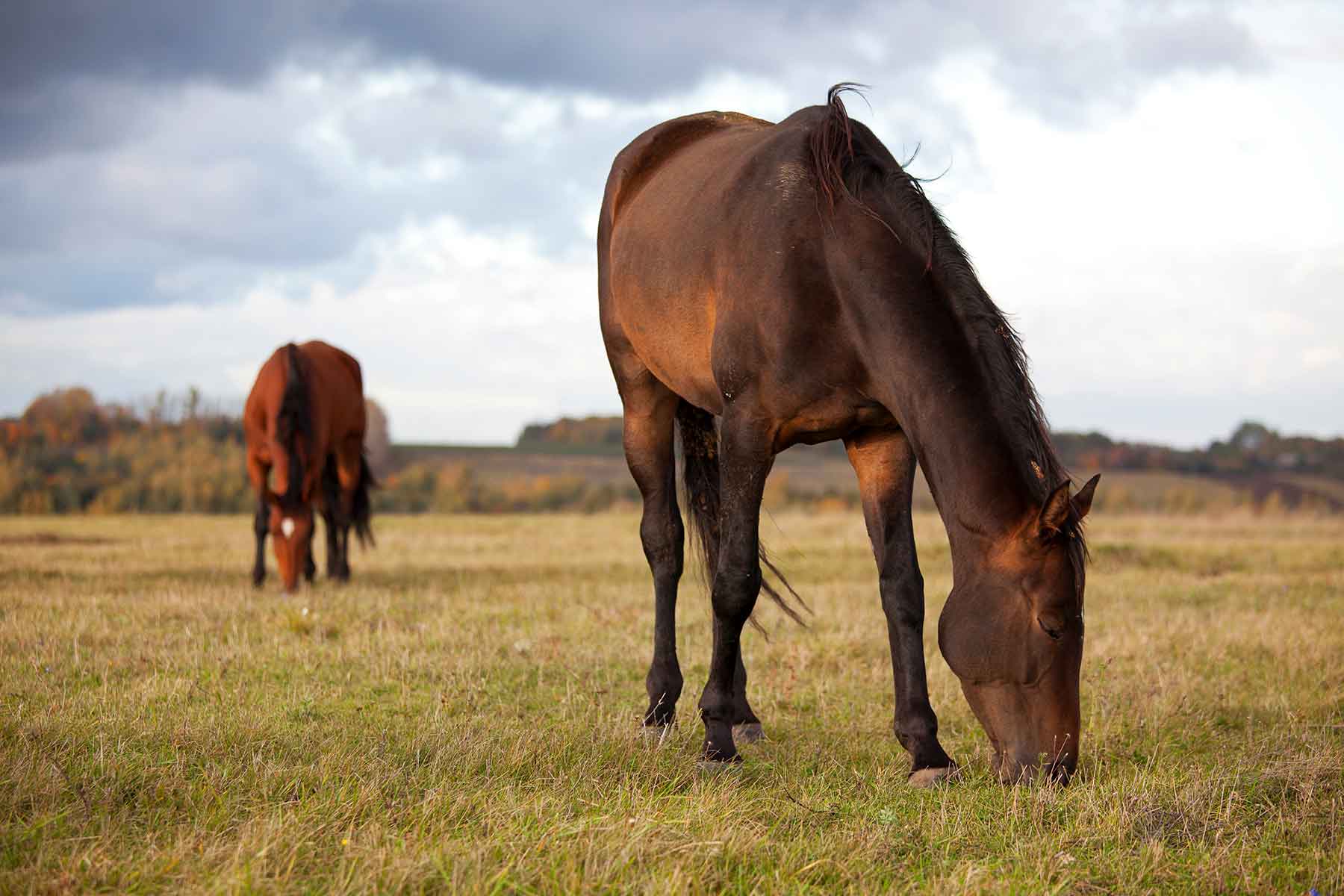
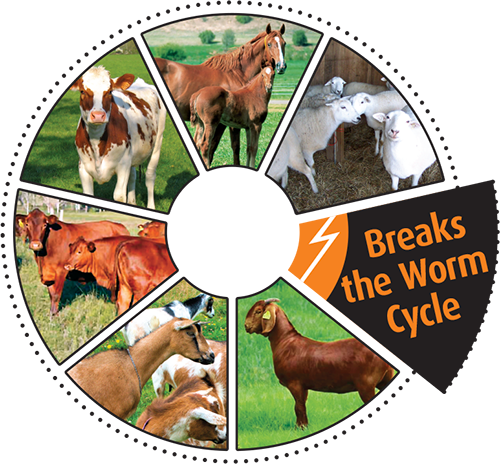
- Cross-graze with cattle or horses to help clean paddocks of sheep and goat worms.
- Put young, vulnerable stock on low-worm-risk pasture.
- Feed well, since good nutrition improves resistance and resilience — nodule worm hits poorly-nourished animals hardest.
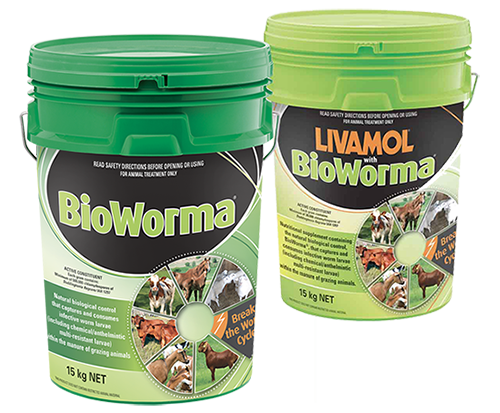
Biological control with Duddingtoniaflagrans (BioWorma) reduces the larvae in the manure before they reach the pasture, complementing grazing management and lowering the overall worm challenge without chemical selection pressure.
Bring these together with monitoring and effective drenching as one integrated program, and nodule worm rarely becomes the problem it can be when control slips.
Bring these together with monitoring and effective drenching as one integrated program, and nodule worm rarely becomes the problem it can be when control slips.
Frequently asked questions
Answers to common nodule worm (Oesophagostomum) questions — what the gut nodules are, symptoms, lifecycle, the sausage-casing problem, treatment and prevention.
What is nodule worm?
Nodule worm is a roundworm of the large intestine of sheep, goats and cattle, from the genus Oesophagostomum, found worldwide. The damaging species in sheep and goats is O. columbianum; while its close relative, O. venulosum (the large bowel worm), is usually harmless. The adults are relatively large — around 20 mm — stout, white worms.
Why is it called nodule worm — what are the nodules?
As the young larvae burrow into the gut wall, the immune system walls them off, forming pea-sized nodules, or knots, in the intestine — giving the condition its common names, “knotty gut” or “pimply gut.” Over time the nodules can harden as they become caseous or calcified.
What are the symptoms of nodule worm?
Persistent green, mucousy diarrhoea, weight loss and poor growth, a depressed appetite, lethargy, and abdominal pain. Disease is most severe in young and poorly-nourished stock, and damage is caused by both the migrating larvae (which form the nodules) and the adult worms.
How do animals get nodule worm?
By eating infective larvae on contaminated pasture, and occasionally from contaminated feed or bedding when housed. The larvae burrow into the gut wall and form nodules, then return to the large intestine to mature. The prepatent period — from infection until eggs appear in the dung — is around five to six weeks, longer than most gut worms.
Why does nodule worm matter at slaughter?
Beyond production losses, the nodules (“pimply gut”) damage the intestines so they can no longer be used as natural sausage casings — a direct economic loss to the meat industry. It is one reason even modest infections are worth keeping in check.
Where and when is nodule worm a problem?
It is found worldwide but does most damage in warm, summer-rainfall regions and through the warmer months. The larvae of the damaging species are sensitive to cold and drying and are killed by frost, so they rarely survive harsh winters — which strongly shapes where and when outbreaks appear.
How is nodule worm treated and prevented?
Modern broad-spectrum drenches generally keep nodule worm at low levels, and a worm-egg count with a larval culture confirms what you are dealing with. Prevention uses the same toolkit as other gut worms: grazing management, cross-grazing, low-worm-risk pasture for young stock, and good nutrition. Biological control with Duddingtonia flagrans (BioWorma) reduces the larvae in the manure before they reach the pasture.